Friday, October 18, 2013

The Day the Advertising (and almost the Corvette) Died


The Day the Advertising (and almost the Corvette) Died
By Rick Tavel© All Rights Reserved September 18, 2013


Monument "The Day The Music Died"
 Don MacLean may have written a song about the day the music died but during the very early days of the 1990's Corvette's print advertising did in fact die and during that same time America's sports car came precariously close to dying along with it.   Many Corvette aficionados have no idea of the clandestine corporate actions taking place inside the largest corporation in the world which resulted in a death sentence for the  most iconic American car in history.  Not coincidentally during that same time frame Corvette display advertising virtually ceased to exist.  It set a precedent for marketing the Corvette and laid the foundation for the elimination of Corvette print advertising, other than during new model introductions, ever since. It may seem hard to believe especially since Corvette print advertising was as much a part of the first four generation Corvettes as a Regular Production Option, especially to enthusiasts over 45 years old.  The ads were creative, informative and connected with enthusiasts and potential buyers. They inspired the dreams of not only young boys but millions of men as well.  Countless owners of Corvettes today attribute their ownership to the Corvette dreams of their youth. When the advertisements went away there was no fanfare, no announcement, they simply died.  And like McLean's song, which has been interpreted in several ways, what is undeniable about the lyrics is he is telling a story about a defining moment in America when something had been lost, and we knew it, we felt it.  And though some of us may have been aware that something had been lost when the clever and compelling Corvette print advertising died, at the time few of us knew of the American icon we were in jeopardy of losing, the beloved Corvette.

Dig out some old "buff" magazines from the 60's or 70's and then some from 1992 or later and compare what you find in the way of Corvette advertising.  I used the most popular enthusiast magazine of the day, Car&Driver.  I found a plethora of Corvette ads during the 60's and 70's.  But not in the issues I checked during the 90's.   I found several GM ads during the 90's but the only Corvette I found in advertisements were those pictured in tire ads.  There were several ads for GM’s high volume cars like the Oldsmobile Cutlass and for the high profit cars like the Cadillac Seville and Oldsmobile Toronado Trofeo.  And even though extraordinary refinements were being made to one of the finest sports cars in the world, the ZR1, after the initial introductory ads in late 1989 and 1990 there were few if any ads to proclaim the Corvette’s return to its performance heritage. 


During the late 1980’s to mid 1990’s the Corvette’s future was in serious jeopardy; the car came disturbingly close to be cancelled by virtually eliminating the funding for the C4's replacement.  The ZR1 extended the life of the aging C4 Corvette design and breathed temporary life into the current generation, which had already been in production for almost 7 years and due to be replaced in 1993.  The new C5 was already under development and scheduled for a 1993 introduction to coincide with the Corvette’s fortieth anniversary but by the beginning of the 1990’s things inside General Motors took a dramatic but not wholly unexpected turn. 

Roger Smith, CEO, had been making drastic changes in the corporation as he neared retirement.  He was driven to insure that his legacy would live on well past his retirement and as a result made changes throughout the corporation to everything from the ways cars were built, the factories they were built in, and the approval and process required to get a vehicle produced. One of his goals was to achieve record profitability before he left and one of the steps he took to achieve this was to embark on a dramatic cost cutting effort to milk as much profit as possible, known in business as “milking the cows and eating the calves.”  And although Smith was able to achieve his goal, it came at a high cost, mortgaging future results and wreaking havoc throughout the corporation and almost bringing the corporation to bankruptcy shortly after he retired.   His profitability strategy did succeed for 1988, earning almost $5 billion, the most profitable year in the corporation’s history until recently.  Though Smith’s plan did succeed for the year, the longer term outlook was anything but encouraging.  Some of Smith’s decisions had left the company vulnerable in a difficult economy and by the time he turned the corporation over to Bob Stempel, his chosen successor, in 1990, GM had managed to lose almost $2 billion, which doubled the following year and then skyrocketed to a staggering $24 billion loss in 1992.   In only two short years since Smith’s record breaking profitability the corporation was losing billions annually.

By the time Stempel, a former engineer, had assumed the chairman position it was his job to return the corporation to profitability and sort out and resolve the crisis he had inherited from his predecessor.  The overwhelming task would challenge even the most experienced corporate leader, but it took its toll on the rookie chairman as he searched for ways to stop the bleeding.  Overwhelmed by the challenge, one of the ways he tried to resolve the mounting red ink was to turn more control over to the “bean counters” in an attempt to get even more costs out of the operations.  The “bean counters” slashed several programs, some deservedly and others not, to try and reduce expenses.  In their zeal they did almost irreparable damage to the world’s largest automobile manufacturer.  The financially focused decision-makers dictated policies based solely on cost, not quality or longevity, which resulted in poorly made vehicles and which further confused and demoralized workers at all levels.  Plants were closed, union and management employees at all levels were laid off, departments were consolidated and reorganized, more often than not, well beyond the point of peak efficiencies.

Every program within the corporation was looked at for cutbacks, consolidation and downsizing whether profitable or not, all in a frenzy to cut costs and maintain sales of their profitable high volume and high profit cars which were under attack from imports.   Now, not only was General Motors losing massive amounts of money but they were also losing respect throughout the automotive world for shoddy quality and company morale was at an all time low from the constantly changing business plan and almost weekly reorganization efforts. 

And even though the low volume Corvette was both profitable and the expenditure for the entire program was relatively small, it was not immune to cutbacks.  And so, even though the Corvette was operating “in the black,” it came as an unexpected surprise when Bob Stempel announced in a high level executive conference in the fall of 1989 that the Corvette development program was “now on indefinite status.”


Many of those in attendance that heard those words interpreted them to mean the future of the Corvette was dead and though demoralizing to those that had worked so hard on the Corvette, no one was really sure what he exactly meant.  But in the austere, cost cutting environment that permeated the corporation anything on “indefinite status” was as good as gone.  It appeared that, minimally, all of the C5 development would cease and possibly it meant that the costs for maintaining programs to support the current C4 would also be cut.  Insiders realized that the aging C4, even with the ZR1, could not compete much longer and if the development of the C5 was cancelled, it virtually meant the end of the Corvette. 

Getting a new C5 to the market was clearly the only way the Corvette would survive so the team had to devise a way to continue the design and development of the C4 replacement.  One of the advantages of being a small program in a large corporation is that it is often possible to just keep doing what you have been doing as long as you keep a low profile and stay under the radar.  Obviously in the largest corporation in the world, and one losing $24B a year, there were bigger “fish to fry” than the relatively tiny Corvette program.  

It was obvious that the Corvette had several loyal supporters within the organization at all levels and they did not want to see America’s sports car terminated.  So those committed managers associated with the Corvette proceeded to just continue to do what they were doing but to do it more quietly and use a little “creative accounting” to hide any costs associated with the C5 development.  But operating “under the radar” and with no development budget it was clear that the C5 could never meet the original target date for a 1993 introduction.

Throughout the corporation things were so bad, moral so low, and with the organizational changes that were taking place almost on a daily basis no department or individual could be held accountable.  Reporting relationships were often blurred and circumvented.  Deadlines were a moving target and resulted in delayed new model introductions.  The new Camaro, with the design and engineering almost complete when the cutbacks were instituted and much further along than the still undeveloped C5, was due to be in dealerships in 1992 and still did not reach the showrooms until late in 1993.   Clearly the Corvette team, operating “under the radar” and with no official development budget, could never meet the original target date for a 1993 introduction.
Jim Perkins  Chevrolet GM


From one day to the next the designers and engineers assigned to the Corvette program were not sure whether or not they would have a job when they came to work.  On more than one occasion the Corvette program had the budgets cut so severely that even being able to fund programs necessary to maintain the C4 seemed impossible.  And yet most of the engineers and designers assigned to the Corvette continued to throw themselves into their jobs and work long hours to insure that America’s sports car would live on.  (In this brief article the truly heroic efforts of the Corvette team to save their car cannot be adequately covered and if you want to learn more about what it took to get the C5 to market I suggest reading James Schefter’s excellent account in All Corvettes Are Red.)  It was only through their dedicated efforts along with a few other executives that managed to save the most iconic car in America.  It was guys like Joe Spielman, head of North American Midsize vehicles (including Corvette), Jim Perkins, Chevrolet General Manager, Dave McLellan and Dave Hill, Corvette Chief Engineers, Cardy Davis and Russ McLean, Corvette Program Managers, Jerry Palmer, Executive Director of Advance Design, John Cafaro, Studio Chief of Chevy #3 (Corvette), Tom Peters, Studio Chief of Advanced Design, and perhaps one of the most important and little recognized team members was Tom Krejcar, Corvette Financial Manager, who put his job on the line by bending the rules, ignoring some directives, and finding new ways to creatively code C5 expenses to fund the continued development of the C5.
Dave Hill Corvette Chief Engineer of C5
 
 The salaries and expenses of several of the engineers and all of the administrative staff which contributed to the development of the C5 were actually charged to the C4.   Higher level executives that loved the Corvette and wanted it to continue “officially” didn’t know what the Corvette team was doing and closed their eyes to the continuing work on the replacement car.  Several executives, engineers and designers literally put their careers on the line to be able to continue the C5 development.  Jim Perkins, Chevrolet’s GM, believed and openly proclaimed, “There is a little Corvette in every Chevrolet.”  In order to help save the Corvette he went as far as to divert $1M from Chevrolet’s budget to help finance the much needed replacement Corvette.   He knew well the importance of the Corvette in driving other Chevrolet sales.   And though that may not sound unusual to anyone who does not understand General Motors organizational structure, car manufacturers like Chevrolet, Buick, and Cadillac do not develop or fund models.  The divisions within GM are “marketing organizations” and vehicle development is strictly GM’s responsibility.  It was a ballsy move on Jim’s part and one of the reasons we have a Corvette today and also one of the reasons Jim is in the National Corvette Museum’s Hall of Fame. 

CERV IV  Concept car in which the new C5 backbone chassis was tested

In all probability it was the budget reallocations and cutbacks, the need to creatively find money to fund the C5 development as well as the need to keep a “low profile” that caused the disappearance of Corvette advertising from magazines except during new generation unveilings.  Sales fell off in the early 90’s, slipping from approximately 26K cars in 1989 to a little over 20K cars annually in 1991 and 1992.  It is impossible, however, to attribute all of the lost sales to advertising cutbacks, though there is little doubt that it was a major factor.  What cannot be accurately calculated is the net profit impact the reduced advertising cost had in relation to the reduced sales.  But we must also remember that the C4 was over seven years old in 1991 so part of the slip in sales can be attributed to aged model. 

The quality and effectiveness of the Corvette’s marketing is a subject that has been debated for years, and the lack of advertising is one of the major topics frequently brought up.  Even today most of the marketing for the Corvette is put into event sponsorship as opposed to print and TC advertising.  During the televised coverage of the Rolex® 24 Hours of Daytona, which the Corvette won their class, there was no TV advertising to promote the Corvette.  Other Chevrolet models were advertised but not the Corvette even though Porsche® and the Viper® both advertised throughout the race.

  Understanding this era in the Corvette’s history is not only important but also offers a better perspective to perhaps the most critical events affecting the future of the car.  It also illustrates the outstanding quality and commitment of the Corvette team in not only keeping the Corvette alive but at the same time designing and building a beautiful, performance based Corvette that raised the bar for all future generations.   Understanding this part of Corvette history gives the Corvette lover a deeper appreciation realizing how close we came to losing it, who is responsible for saving it and why the award winning Corvette advertising that was so much a part of the first four generations vanished. Thankfully, though the advertising died and the Corvette survived.
The beautiful C5 Corvette.   An example of - That which doesn't kill you makes you stronger
 

Wednesday, October 16, 2013

Harley Earl’s Corvette #1 Seller at Mecum’s Chicago Auction But It Should Have Brought More


Harley Earl’s Corvette #1 Seller at Mecum’s Chicago Auction But It Should Have Brought More
By Rick Tavel© October 15, 2013

Harley Earl's 1963 Corvette on the block at Mecum's Chicago Auction
 
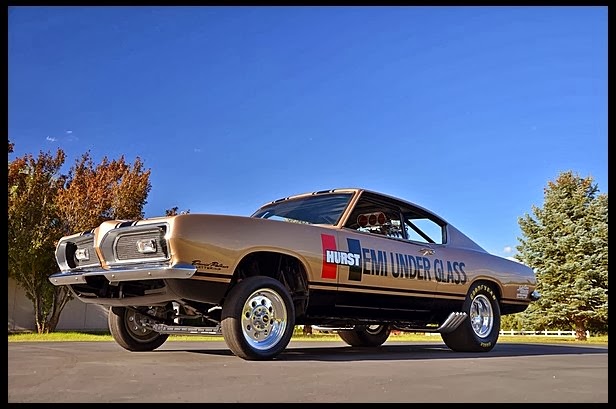
If you are into collector cars, and particularly collector Corvettes, you might have made a point to watch Velocity® TV this past Saturday to see one of the crown jewels of the Corvette kingdom go across the block.   Mecum’s  “Windy City” auction was held October 10 -12, where almost a thousand cars crossed the block and 64% of the cars were hammered sold.  Though the Schaumburg Convention Center offered shelter from the rainy weather, the weather still appeared to have an effect on the a crowd and the bidding, quite a contrast to the Dallas auction held only a few weeks before.  One of the headliners of the auction was a collection of four world famous funny cars, the iconic Hemi Under Glass cars, famous for their unmatched “wheelies”,  which not only failed to meet the reserve but was so far below the seller’s expectations that the four car collection will be broken up and sold individually in Kissimmee, Florida, in January.  Even though the turnout was excellent for a first time event, and the final  tally showed over $18,6M in sales the bidders appeared to lack intensity. 


The legendary Hemi Under Glass doing one of its famous wheelies


 And to further illustrate the point, an even more puzzling occurrence happened to the other headline attraction, Harley Earl’s personal specially built 1963 Corvette Stingray convertible, which sold for $1.5M hammer price, $1.65M including the buyer’s premium.  It was the high sale of the auction but a car that clearly should have brought significantly more than the hammer price.  The car sold to a phone bidder after bidding quickly moved the price $1M and then up to $1.5M, where the reserve
 
on the car was met and it sold.  The owner must have been pleased since the car was purchased in 2010 for just under $1M and a 60% return on investment at three years is pretty healthy.  But the dilemma is, why, in the hottest Corvette market in history, did one of the five Corvette “Crown Jewels” sell for only $1.5M, especially in comparison to the 1967 Corvette that just set a world’s record in Mecum’s Dallas auction just a few weeks before?


 “Only $1.5M,” sounds pretty “elitest” but it is not meant that way.  In a market where production Corvettes are selling for $600K to over $1M, and a 1967 L88, one of twenty Corvettes produced that year with the vaunted engine, just set a world’s record selling for $3.2M, then why did the father of the Corvette, Harley Earl’s personal Corvette and one of one specially built cars bring less than half of the price of the L88.  The law of supply and demand dictates that in relative terms this car should have brought much more than the hammer price and add to that the best ownership history a Corvette could have and it is pretty clear that the buyer got a pretty good buy.  I realize that $1.5M is a lot to pay for any car, certainly more than I can afford, but in terms of the recent market and all of the attributes which make this one of the bluest, blue-chip collector Corvettes, the $1.5M sale is clearly a disappointment.

“Has the bottom dropped out of the Corvette market?” one might ask.  I don’t think that is the case and the Corvette market appears to still be red hot.  But there must be a reason and before collectors run for cover, I am offering a few for consideration.

 First, no matter how significant a car may be it takes at least two, preferably more, committed bidders that want and can afford the car.  If that doesn’t happen then either it will not meet the reserve or the winning bidder is going to get a helluva bargain, which may have been the case here.  And watching the auction it was apparent that there were no “had to have it” buyers in the room.  There were obviously bidders who knew what the car was but none that were willing to pay what the real value of the car was worth. There was more action from phone bidders than from any bidder in the room and when that happens it does not create the same excitement that happens when bidders are going “head to head” in front of the crowd.  I have wondered about the phone bidder that ultimately ended up with what I consider to be a great investment, just how committed was he or she? If the bidding had continued was the phone bidder prepared to go to $4M or more?  We will never know but something else to ponder. 

Another factor that enters into the equation and one that may have held down the price of the car is the lack of excitement that seemed to permeate the audience.  I am not referring to the “hype” from Mecum, the Mecum team does a great job of “hyping” their cars, and especially their “star” or “headline” cars, but sometimes the audience is just tough, no excitement or electricity in the room.  You’ve heard comedians refer to this.  And maybe the often reserved Midwestern demeanor entered into the equation.  I remember one of the toughest speaking engagements I ever had was to a reserved Midwestern audience where I just couldn’t get the audience engaged. (Please no letters, I have lived in the Midwest most of my life and yes I am aware that Bloomington Gold is in Illinois.)  True, a lot of the hype and excitement at an auction is created by spirited bidding and it appeared that throughout much of the auction it was this “spirited” bidding and an excited cheering crowd that was missing.  Usually when bidding reaches six figures or more the audience gets involved, clapping and cheering, but there was little cheerleading for the Hemi Under Glass funny cars or the Harley Earl Corvette.

 As a further comparison to illustrate the point just compare the list of top ten cars sold from the two auctions.

 Mecum’s Chicago (Schaumburg) Auction  October 10 – 12, 2013     Total Sales $18,634,223
965 Lots offered 615 Sold  64% Sell Through
1.    1963 Harley J. Earl Corvette (Lot S110) at $1,500,000
2.    1969 Chevrolet Camaro ZL1 (Lot S135.1) at $500,000
3.    2005 Ford GT (Lot S219) at $240,000
4.    1965 Shelby Cobra, CSX4337 (Lot S205.1) at $140,000
5.    1967 Chevrolet Corvette Convertible (Lot S233) at $135,000
6.    1968 Dodge Hemi Dart Lightweight (Lot S116.1) at $125,000
7.    1969 Pontiac Trans Am (Lot S151) at $118,000
8.    1962 Chevrolet Corvette Convertible (Lot S157) at $110,000
9.    2013 Chevrolet COPO Camaro (Lot S174) at $105,000
10.  1951 Willys Overland Custom Pickup (Lot S116) at $100,000


Mecum’s Dallas Auction  September 4 – 7, 2013   Total Sales $37,913,093
1432  Lots offered  986 Sold   70% Sell Though
1.    1967 Chevrolet Corvette L88 Convertible (Lot S123) at $3,200,000
2.    1969 Chevrolet Camaro ZL1 (Lot S127) at $530,000
3.    1957 Chevrolet Corvette Airbox (Lot S121) at $290,000
4.    1969 Chevrolet Yenko Camaro (Lot S134.1) at $275,000
5.    1970 Chevrolet Chevelle LS6 Convertible (Lot S122) at $275,000
6.    2005 Ford GT (Lot S107) at $255,000
7.    1963 Chevrolet Corvette Z06 (Lot S125) at $250,000
8.    2008 Lamborghini Murcielago LP640 Roadster (Lot S110) at $230,000
9.    1965 Chevrolet Chevelle Z16 (Lot S165) at $225,000
10.  1967 Chevrolet Corvette Coupe (Lot S204.1) at $205,500


 Finally the last thing to consider between the world’s record 1967 L88 Corvette and the Earl 1963 Corvette was what the major attribute the 67 had that the 63 did not.  That apparently was the “performance” aspect and performance heritage.  The 67 was loaded with documented race history and perhaps the most coveted production engine in Corvette history.  Certainly rare performance Corvettes are perhaps the hottest commodity in the market today.  It is the big block, high performance Corvettes that are knocking down the big bucks.  So that is certainly a consideration in the price difference and though a $1.7M premium over Earl’s car may seem a bit steep, it may just be an indication of how important performance is in collector cars. 

So there may be some justification for the price of the Earl car and the fact that it did not set a record.  It may also be an example of the well known adage: the bottom line is, a car is worth only what someone is willing to pay for it.  And in the case of the Harley Earl 1963 Corvette that price was $1.5M,  a long way from a world’s record.


Wednesday, September 18, 2013

Another Corvette World’s Record in the Making?


Harley Earl’s Personal Corvette - Another World’s Record in the Making?
By Rick Tavel© 9-17-2013


Right on the heels of the record breaking sale of a 1967 L88 Stingray for $3.2M at Mecum’s Dallas Auction September 7, Dana Mecum is out to break his own record for the price paid for a Corvette.  The “Dealmaker” knew he’d have to do something spectacular for an encore at his upcoming Chicagoland Auction, October 10-12, and as if pulling a rabbit out of a hat he is magically offering the special modified 1963 Corvette given to Harley Earl by GM honoring his contribution to the corporation and the Corvette: Harley Earl’s personal Corvette.  That's right, Harley Earl's personal modified 1963 Corvette, the unique Corvette that has been invited to Bloomington Gold more than any Corvette in history. 

The car became Earl’s daily driver while he lived in Palm Beach, Florida, during the first years of his retirement.   It is a Nassau Blue, 300 HP, convertible with several one-of-a-kind features: custom through-the-body side exit exhaust, special gauges which included an altimeter, accelerometer, inside/outside temperature, and vacuum pressure.  In addition the car has stainless steel door and foot well inserts and plush carpeting, custom blue leather seats with white trim and dual circuit 1965 style 4 wheel disc brakes.   The lot number of the car is S110 and will cross the block at Mecum’s Chicago auction in Shaumburg, Illinois, on Saturday, October 12, along with a thousand other collector cars during the three day event.

Harley J. Earl is the father of the Corvette which he conceived in the early 1950’s and introduced to the public in 1953.  After a rocky start the Corvette has gone on to be the most iconic car in America.  Following his retirement as Vice President of Design for General Motors in 1958, Earl continued to stay on as a consultant, and in 1963 the corporation wanted to recognize his outstanding contribution and had this special Corvette built (shop order 10323) based on the 1963 Corvette show car exhibited at the Chicago Car Show.   After Earl designed the LaSalle in 1927, Alfred Sloan, CEO of GM, was so impressed with his talent that in 1928, he created the Art and Color Department of General Motors and appointed Earl as the head.  Earl became the dean of Detroit stylists and set the bar for automobile styling in America. 

Each year the winner of the premier Daytona 500 receives the vaunted Harley J. Earl Trophy, and in 1965, as Grand Marshall of the season-opening NASCAR event, drove his special Corvette on a parade lap before the race.   After selling the car later in the 1960’s its ownership history was temporarily lost until it resurfaced, identity unknown, in 1973.  It was purchased at a bankruptcy sale for $1500 by a amateur racers who intended on drag racing the unusual car.  But before they moved ahead with their project they decided the car might be significant, so they let the car sit for seven years. 


In 1980, they took the car to Corvettes at Carlisle and offered it or sale.  The car received a lot of attention, although there were no buyers.  One enthusiast, Joe Clark, was particularly interested in the car since it was an aberration having a 1963 VIN and several 1965 components along with custom exhausts which came through the side of the body where the stock 1963 Corvette had side vents.  Though he did not buy the car at Carlisle he could not forget it.  Research revealed the car resembled the Chicago 1963 show car and decided that the Corvette was more than a customizer’s attempt to mimic the show car.  He arranged to re-inspect the car in 1981, and after a month of negotiations with the owners, its identity still unknown, he bought the car.  One evening while Clark was dismantling the car with Ken Heckert, another Corvette enthusiast, he discovered a hand-written number code inside a door trim panel: S.O.10323.  Following prompting from knowledgeable Corvette enthusiasts, he enlisted the help of General Motors.    Clark and his partner in the project, restoration specialist Bob Gold, visited the GM Design Staff and confirmed the car as the very one custom-built gift to Harley Earl.

 
Once the origin of the car was nailed down it was restored to the exact specifications of the car when it was bestowed on Harley Earl.   The Corvette has gone on to become one of the most significant Corvettes ever produced.  It has been invited to Bloomington Gold more often than any other car and is a Corvette Hall of Fame inductee.  The Harley Earl Corvette is a one-of-a-kind factory special with a historic and illustrious pedigree.   Now I was not an economics major but I do understand the law of supply and demand.  The record setting 1967 L88 Corvette sold on September 7th in Dallas was a magnificent car.  It had undergone a concours level restoration from Nabers Brothers, it had a strong documented race heritage, and it was one of twenty L88 Corvettes produced in 1967.  It sold for $3.2M.  This car also has an even more impressive provenance, was Harley Earl's personal Corvette, and was the only Corvette produced with modified features and has been the most invited Corvette to Bloomington in history.  That's one of one, not one of twenty. It was the "father of the Corvette's personal car which he actually drove for a few years.  Now you don't have to be a genius to figure out which car is more rare and significant.  So you decide what could this car be worth?  Based on the car’s provenance, pedigree, build specifications and one-of-a-kind status, the world’s record set in Dallas earlier this month may very well be a short-lived record.


Monday, September 9, 2013

Corvette Nirvana


Corvette Nirvana - Dana Mecum's Dallas Auction

New World's Record Auction Price Set on Corvette

By Rick Tavel© Sept. 7, 2013 All Rights Reserved

                                         $3,200,000 World's Record
 
1967 Corvette L88 1 of 20 produced and former drag race champion

Dana Mecum’s favorite car has to be the Chevrolet Corvette, especially if solely based on the number of outstanding high dollar cars that were hammered down during the last four days of his third Dallas auction.  It was clearly evident that Corvettes carried the four-day auction and were the car of choice for collectors where a new record price was paid for a Corvette ($3.2M, a 1967 L88, fully documented former NHRA record holder and the only ’67 L88 to retain its original body panels -lot S123- (See story - http://www.corvetteblogger.com/2013/09/07/video-1967-l88-corvette-convertible-sells-for-record-3-2-million-at-mecum-dallas/#more-16267).  Of the 172 Corvettes that crossed the block 106 were sold, a 61% sell through rate, for a combined hammer price of $9.106M.  Though some buyers were able to grab some excellent bargains during the first two days of the sale, the last two days saw spirited bidding and prices well above average.  Almost twenty Corvettes were hammered down above $100K.   Most restored second generation cars were selling between $100K to $150K and if the car had any rare options it was selling close to or above $200K.

1957 "Airbox" Corvette Sold for $290,000
 It should be noted however that there were some outstanding and historically significant Corvettes being offered many of which, like the record setting ’67 L88, were from the Buddy Herin collection.  I recapped some of the important cars being offered in an article last week (see below).  For example the rare 1957 “Airbox” (Lot S121), one of only 43 produced, sold for $290K while the 1961 “Big Brake fuelie” (Lot S126) brought $150K.  The award winning red 1963 Z06, (Lot 125) one of 199 Z06’s produced for the entire C2 production run, sold for $250K.   A 1967 Bloomington Gold Benchmark Red 427/435 convertible (Lot S204.1) was also among the top ten
 
1963 Corvette Coupe Sold for $250,000
cars sold in Dallas bringing $205K and tied with another 1967 Red 427/435 convertible (Lot S141).  Almost every big block C2 brought $100K or more.

1962 Big Brake Fuelie Corvette Sold for $150,000
Most of the Corvettes that crossed the block on Friday and Saturday were of exceptional quality and subsequently carried high reserves.  Though the majority of sellers’ expectations were exceeded, over sixty cars were not hammered and went to “the bid goes on” area where buyers and sellers often can come to a compromised agreement on price.  One of the premier cars of the auction, the last documented L88 produced (lot S130.1), a 1969 Fathom Green C3, failed to meet reserve even though the car had been bid to $430K and had been purchased earlier


1967 Corvette Sold for $205,000

in the year at another auction for $280.5K, not a bad return for eight months but apparently not good enough.   But that was not a unique occurrence, Lot S167, a 1967 black, 427/435 convertible, fully documented and restored was bid to $275K;  Lot F235, a 1967 427/435, Marina blue convertible was bid to $200K, and Lot S188, a 1966 “big tank” coupe was bid to $170K and all failed to meet the sellers’ reserves.  


1969 L88  Bid to $430K but did not meet reserve

Based on the results of Mecum’s Dallas auction, owners of first and second generation Corvettes should be ecstatic based on the continued upward spiral in prices on those cars. 

High quality, original, numbers matching, restored first and second generation Corvettes are bringing well above $100K and several with rare options are getting $200K or more in today’s market with no evidence of those prices falling in the near future.  Of the Dallas auction’s top ten sellers four were Corvettes, all bringing in excess of $200K. 

 Dana Mecum said in an interview the Dallas results were great and that he actually needs a larger facility, with more space to park consigned cars, to help him meet the demand for an expanded auction in the future.  I’m sure based on the results of this year’s event he will be looking for ways to make that a reality and I am also sure that based on the quality level of the cars at this year’s event, auto enthusiasts and especially Corvette enthusiasts, would welcome that expansion. 
A Few High Dollar Cars That Failed to Meet Reserve

 
Lot F235 1967 Corvette Bid to $200,000 Failed to meet reserve


Lot S188 1966 Corvette Bid to $170K  Did not meet reserve


Lot S167 1967 Corvette Bid to $275K Failed to meet reserve


Here is the article that I wrote before the auction with more details on the cars.
Mecum Offers Museum Quality Corvettes in Dallas
By Rick Tavel© All rights reserved

Right on the heels of his successful Monterey event which generated over $31M in sales, Dana Mecum is headed to the Lone Star state to host another auction extravaganza, September 4th through the 7th.  This will be Mecum’s third year for his annual Dallas event held at the convention center and will be loaded with over 1400 collector cars featuring over a hundred Corvettes including several examples of the six  generations.  Mecum is known world-wide for the vast quantity and high quality Corvettes he miraculously uncovers for each auction and the Dallas auction is no exception. This year Mecum will be selling Buddy Herin’s outstanding collection of extraordinary Corvettes.  If you appreciate rare and historically important Corvettes then it would be worth the trip to get to inspect some of finest Corvettes being offered at auction this year.   Six of those Corvettes could be “headliners” in any auction event but all six will cross the block Saturday afternoon in Dallas. 
The 1967 L88


It would be easy to overlook some of the other significant Corvettes being offered in Mecum’s Texas round-up due to the heavily promoted feature star of the auction, a Chevrolet Corvette convertible, Lot 123, one of twenty L88 Corvettes produced in 1967.  A part of Buddy Herin’s Collection, the Marlboro Maroon Corvette is equipped with the L88 427/430 HP engine, M22 “Rock Crusher” 4-speed manual transmission, 4.11 rear end, heavy duty power brakes, factory side exhaust and F41 special suspension.  It is the only 1967 L88 believed to retain its original body panels and has been restored by Nabers Brothers in Houston, Texas. Mecum estimates the award winning  Corvette will sell for prices approaching $3M.  Yeah that’s a 3 with six zeros following it. Corvettes of this rarity and quality cast a long shadow so it is easy to see how one might overlook some of the other cars being auctioned. Don't be surprised if this Corvette doesn't get hammered down for a new world's record price at over $3M
1966 Big Tank Lot S188
 
Lot S188 427 cubic inches 450 HP
 
S188 Interior

But in typical Mecum style that is only one of several important Corvettes that will find new homes during the Dallas auction.  If you love C2’s and high horsepower then you’ll want to check out Lot S188, a 1966 Corvette coupe, one of only 66 “big tank” Corvettes produced that year.  Along with most high value cars, it will also cross the block Saturday afternoon.  The 427 cubic inch, 450 HP L72 car has only 7200 miles and has also undergone a Nabers Brothers restoration.  The Nassau Blue exterior with black interior car has received the NCRS Top flight award.

Second generation Z06’s are highly prized, and Lot S125 is a beautiful Riverside Red/red interior example and one of the 199 Z06’s produced before General Motors officially withdrew from racing. The Z06 option was only offered on the 1963 model and was a chance to package several competition options and components together. The only choice of engine in the Z06 was 327/360 HP small block with Rochester fuel injection, the famous Duntov-spec solid lifter cam and forged rotating assembly, backed by a Muncie M20 4-speed and posi-traction. In addition the Z06 came with stiffer front and rear springs, heavy duty stabilizer bar and shock absorbers; special large drum brakes with vented backing plates, finned brake drums, internal cooling fans, a dual-circuit master cylinder and finned aluminum knock-off wheels.   In addition to the Z06 options this exceptional example is also optioned with power windows, power brakes, and radio delete. Like many other Corvettes from the Herin collection, Naber Brothers restored the car in 1996  and it went on to capture Bloomington Gold Certification that same year with a score of 98.6, and then in 1999 it earned NCRS Regional Top Flight status.


Lot S125 1963 Corvette Z06
 Or if your taste runs to first generation cars, 17 are on the docket for Dallas.  If historically important first gens are important then how about a 1957 “airbox” Corvette with a race history, originally owned and raced by Sports Car Graphic’s Kenneth Edwards.  Mecum’s is offering Lot 121, one of only 43 “airbox” Corvettes produced in 1957 which offered a new fuel injection system helping the 283 Cubic inch engine attain the mythical "one-horsepower-per-cubic-inch" threshold for the first time.   This option, RPO 579E, included the 283 CI V-8 with Rochester “Ram Jet” fuel injection, cold air induction, Borg Warner 4-speed manual transmission and a column-
Lot S125 Interior of 1963 Z06


mounted 8,000 RPM tachometer. Only 17 or 18 of the original 43 cars ordered with that option exist today. This historically significant Corvette was ordered in Onyx Black with red interior and in addition to RPO 579E, included a heavy duty racing suspension, posi-traction, Wonderbar radio, power top, and painted steel wheels with “dog dish” hubcaps.  About the only option excluded was power windows.   Edwards raced the car at both the drag strip and road courses until selling it in 1962.    Typical of many of the Buddy Herin Corvettes being auctioned, Nabers Brothers did a complete restoration on this award winning car and it has collected several prestigious awards.

Another first generation car, Lot 126, and another part of the Buddy Herin collection, is a 1962 Tuxedo Black/black interior “big brake” C1 that has only 4,901 miles since it rolled off the assembly line.  It is one of only 246 Corvettes produced in 1962 with RPO 687, which encompassed special front and rear shocks, front brake deflector/air scoops, rear brake air scoops, finned drums with internal cooling fans and quick steering adapter, all developed and proven on the track.  It has the most powerful engine available in 1962, the 327/360 HP small block V-8 with Rochester fuel injection and 4–speed manual transmission, which was required with the “big brake” option.  In addition the “fuelie” has a Tuxedo Black auxiliary hard top, Wonderbar radio and painted steel wheels with dog dish hub caps. It was restored to its original triple Black color combination by Naber Brothers, who preserved the original interior with the exception of new carpet and dash pad. It was subsequently awarded Bloomington Gold Certification in 1994, and in 1996 it was awarded NCRS National Top Flight honors and the highly coveted NCRS Duntov Mark of Excellence Award, a highly coveted honor that requires that the car pass a demanding judging regime and rigorous performance testing without a single failure. This exceptional collector Corvette is well documented with the dealer invoice, owner protection plan and a file of supporting paperwork

 Let’s not forget the third generation Corvettes. There are over thirty C3’s being offered with the superstar of the group being the “last documented L88” ever produced. This Fathom Green/Saddle interior car was built the final day of L88 production, Thursday, December 4, 1969, and is the last of the 116 L88’s produced.  It was the beneficiary of a body-off restoration by Thorpe's Corvettes, Thorpe is a past Bloomington L-88 judge. This important C3 is equipped with the L-88 special purpose 427/430hp engine, leather interior, stainless steel brakes, stainless exhaust, transistor ignition system, F41 special purpose suspension,  posi-traction, power brakes, J50/J56 special brake system and M22 Rock Crusher 4-speed transmission.  It is documented with build sheet, tank sticker, owner history, NCRS certificate, judging sheets, and title search back to the original owner.  Another Saturday car it is lot number S130. The car was sold earlier this year for over $275K.

For Corvette lovers this may very well turn out to be one of, if not, the best auction of significant Corvettes in the country this year, not only in the quality level but the historical significance of many of the cars, especially those from Herin’s collection.  Just make sure that if you’re planning on taking one of them home you might want to check with your banker and broker because they say everything in Texas is bigger and I am sure that will apply to the prices of these special cars.